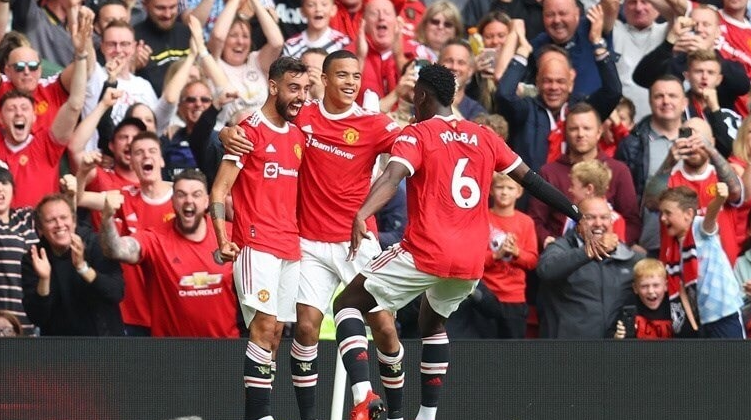
How to identify the favorite and underdog is one of the basic concepts that newcomers to football and betting markets are often interested in. When following a match, you have probably come across terms such as the favorite, the underdog, a 0.5-goal handicap, a 1-goal handicap, or a level ball line.
If you are not familiar with reading betting lines, these symbols can seem quite confusing. In reality, distinguishing between the favorite and underdog is not too complicated. Once you understand how to identify the team considered stronger and the handicap applied between the two sides, you can grasp the basics.
So, what are the favorite and underdog? How can you identify them? How is the handicap related to the favorite and underdog? Let’s find out with Xoi Lac TV in the article below!
What are the favorite and underdog?
In football, the favorite generally refers to the team considered more likely to win. Conversely, the underdog is the team considered less likely to win.
This assessment is usually based on various factors such as form, squad quality, home advantage, head-to-head record, and overall strength.
For example, in a match between Manchester City and a team near the bottom of the table, Manchester City would usually be listed as the favorite. The other team would be the underdog.
However, being the stronger team does not guarantee victory. Football betting lines only reflect an assessment of the relative strength of the two teams when the bóng đá trực tiếp market is offered.
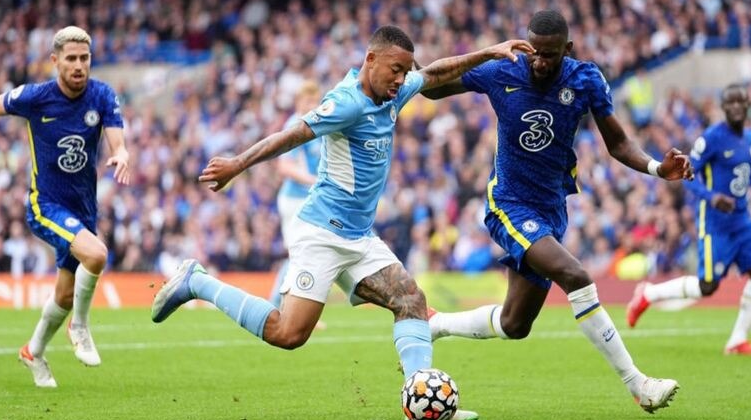
How to accurately distinguish the favorite and underdog
To understand how to identify the favorite and underdog, you only need to pay attention to the handicap being offered.
For example:
In highlight bóng đá ngoại hạng anh, Manchester City gives a 1-goal handicap to a weaker opponent.
In this case:
- Manchester City is the favorite.
- The other team is the underdog.
- Manchester City must give the opponent a 1-goal handicap under Asian handicap calculations.
If the favorite wins by more than the handicap margin, they will cover the corresponding line.
Therefore, the simplest way to identify the favorite is to look at which team is giving the handicap. The team giving the handicap is generally the favorite, while the team receiving the handicap is the underdog.
How is the favorite usually displayed?
On betting odds tables, the favorite is often accompanied by a negative handicap or a symbol indicating that the team must give the opponent a handicap.
Some common handicap lines that Xôi Lạc TV would like you to know include:
- Level ball: 0.
- 0.25-goal handicap.
- 0.5-goal handicap.
- 0.75-goal handicap.
- 1-goal handicap.
- 1.25-goal handicap.
- 1.5-goal handicap.
For example, if a team is listed at -0.5, that team is the favorite and must win the match to cover this handicap.
Meanwhile, the other team receiving +0.5 would be the underdog.
How can you identify the underdog?
The underdog is usually the team considered weaker and receives a goal advantage when compared with its opponent.
For example:
Liverpool -1.0 vs. opponent
Here, Liverpool is the favorite and the opponent is the underdog.
In simpler terms:
Liverpool gives a 1-goal handicap.
This means that, before the handicap result is calculated, the underdog receives 1 goal according to the rules of this type of market.
The important point is that you should not confuse the actual match result with the result after the handicap has been applied.
What is a level ball handicap?
Xoilac Tivi will explain the level ball handicap. This is a special case that many newcomers learning how to identify the favorite and underdog encounter.
A level ball handicap, also known as 0, means that the two teams are considered relatively equal in terms of their chances.
For example:
Liverpool 0 – 0 opponent
In this case, the two teams are considered evenly matched and neither side has to give a goal handicap.
If one team wins the match, the result favors that team. If the match ends in a draw, the settlement depends on the type of market and the applicable rules.
What is a 0.25-goal handicap?
The 0.25 handicap, also known as 0/0.5, is also very common.
For example, a team is considered stronger and gives its opponent a 0.25-goal handicap. In this case, the stronger team is the favorite and the other team is the underdog.
This is a small handicap and often appears when there is not a significant difference between the two teams.
Similarly, 0.75, 1.25, and 1.75 are also common handicap lines.
Why isn’t the stronger team always the favorite?
This is an important factor that newcomers need to remember.
A famous team is not necessarily always listed as the favorite. The handicap also depends on the opponent, venue, available players, and current form.
For example, a major club playing away against an opponent in excellent form may only be given a level handicap or may even be listed as the underdog.
Therefore, how to identify the favorite and underdog should not be based solely on the club’s reputation.
Factors that determine the favorite
In general, the team considered stronger is assessed based on several different factors.
Recent form: A team that has been performing consistently is usually viewed more positively.
Squad quality: Clubs with a large number of high-quality players often have an advantage in terms of personnel.
Home advantage: The home team may sometimes be rated more highly thanks to support from the fans and familiarity with the pitch and surroundings.
Head-to-head history: Previous results between the two teams can also influence the handicap.
Squad availability: Injuries or suspensions involving important players can cause the assessment to change.
Therefore, to understand a handicap accurately, you should consider the overall picture rather than focusing on just one factor.
Conclusion
In summary, how to identify the favorite and underdog is not particularly complicated. You can use the handicap offered to determine which team is the favorite and which is the underdog. The team giving the handicap is generally called the favorite, while the team receiving the handicap is the underdog.
However, remember that being the favorite does not mean a team is guaranteed to win. The handicap reflects various factors, including form, squad availability, home advantage, head-to-head history, and the relative strength of the two teams.